Project · In active development
JobLinx
An AI-assisted job search workspace for organizing applications, analyzing job postings, tailoring application materials, and preparing outreach.
Overview
JobLinx is a production-oriented job search system rather than a simple text generator. It combines application tracking, resume and job parsing, resume matching, material generation, contact research, and outreach drafting in one authenticated workspace. It is in active development and is not presented as a public launch.
Product
An AI-assisted job search workspace for organizing applications, analyzing job postings, tailoring application materials, and preparing o…
Audience / need
Job searching scatters notes, resumes, outreach drafts, and requirements across too many tools — making it hard to stay organized and con…
Ownership
Built more than 10 cached data workflows using TanStack Query
Result
10+ — Cached workflows
The problem
- Candidates lose track of where each application stands across documents, spreadsheets, and chat tools.
- Rewriting resumes and outreach from scratch for every role is slow and inconsistent.
- Useful company contacts and drafts are hard to keep tied to the right application.
The solution
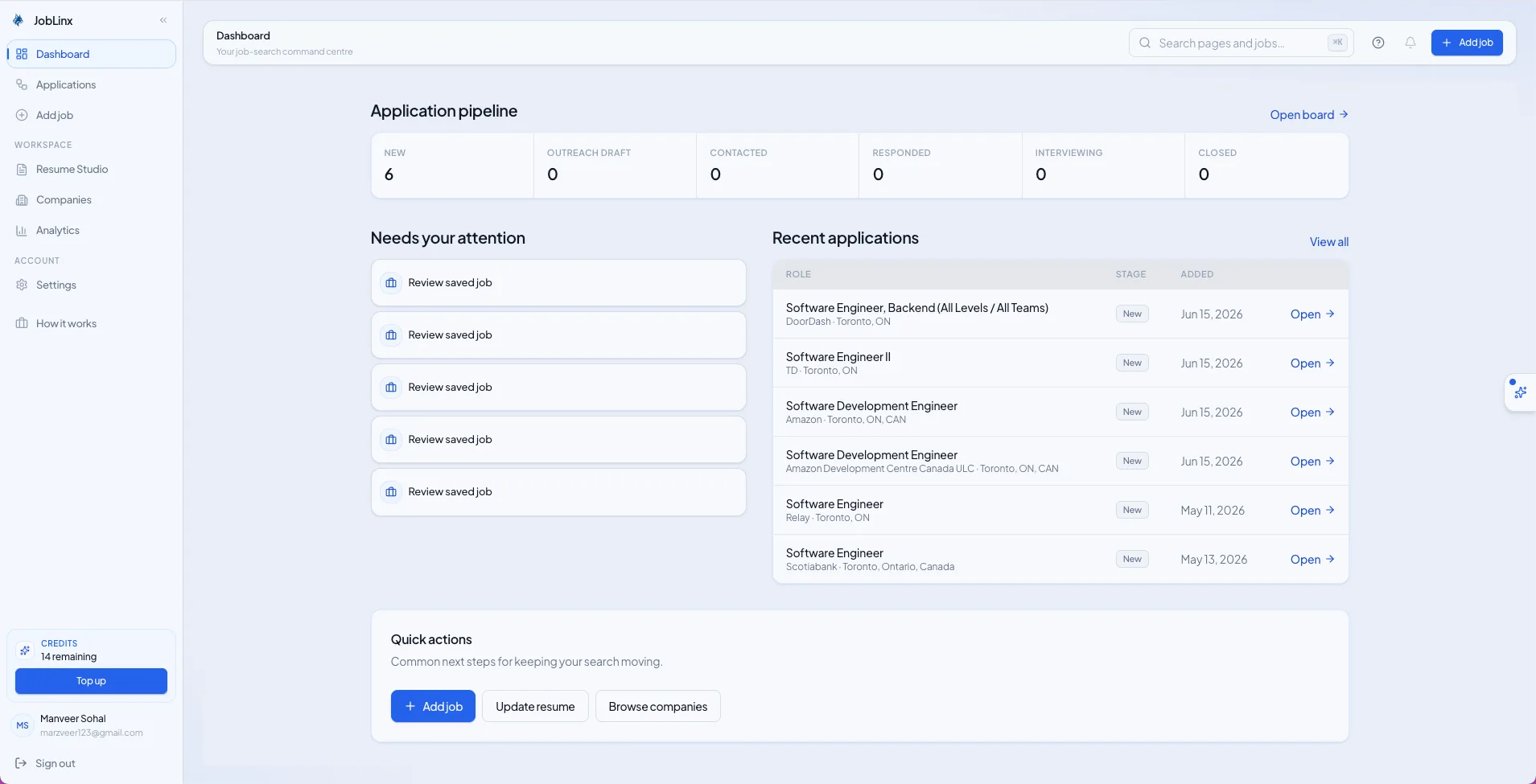
- A single authenticated workspace for pipeline tracking, Resume Studio, companies, and analytics.
- Structured AI workflows that generate materials while preserving editable, versioned outputs.
- Backend-enforced user-specific data access with Supabase and FastAPI.
- Frontend caching with TanStack Query so common job-search views stay responsive.
What I built
- Built more than 10 cached data workflows using TanStack Query
- Reduced repeated database requests by approximately 60% through frontend caching
- Designed a multi-step AI generation workflow for resumes, cover letters, and outreach
- Implemented authenticated user-specific application data using Supabase and FastAPI
- Built the product as a production-oriented job search system rather than a simple AI text generator
Key results
10+
Cached workflows
More than 10 TanStack Query workflows across core job-search views
~60%
Repeat DB traffic
Approximately 60% fewer repeated database requests through frontend caching
Multi-step
Generation flow
Structured workflows for resumes, cover letters, and outreach
Product flow
- Resume upload and parsing
- Job-description parsing and requirement extraction
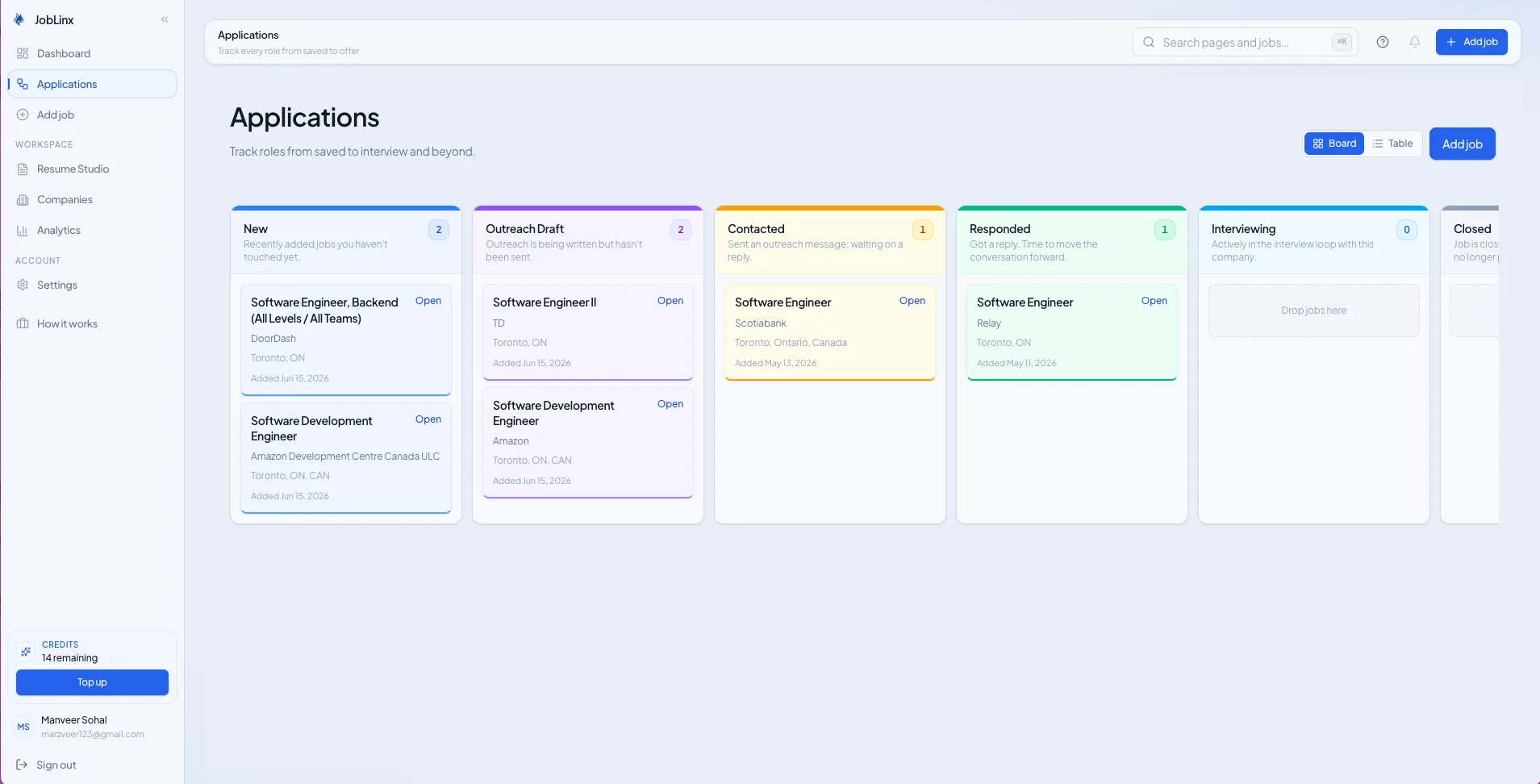
- Application tracking with board and table views
- Resume matching against role requirements
- Resume and cover-letter generation
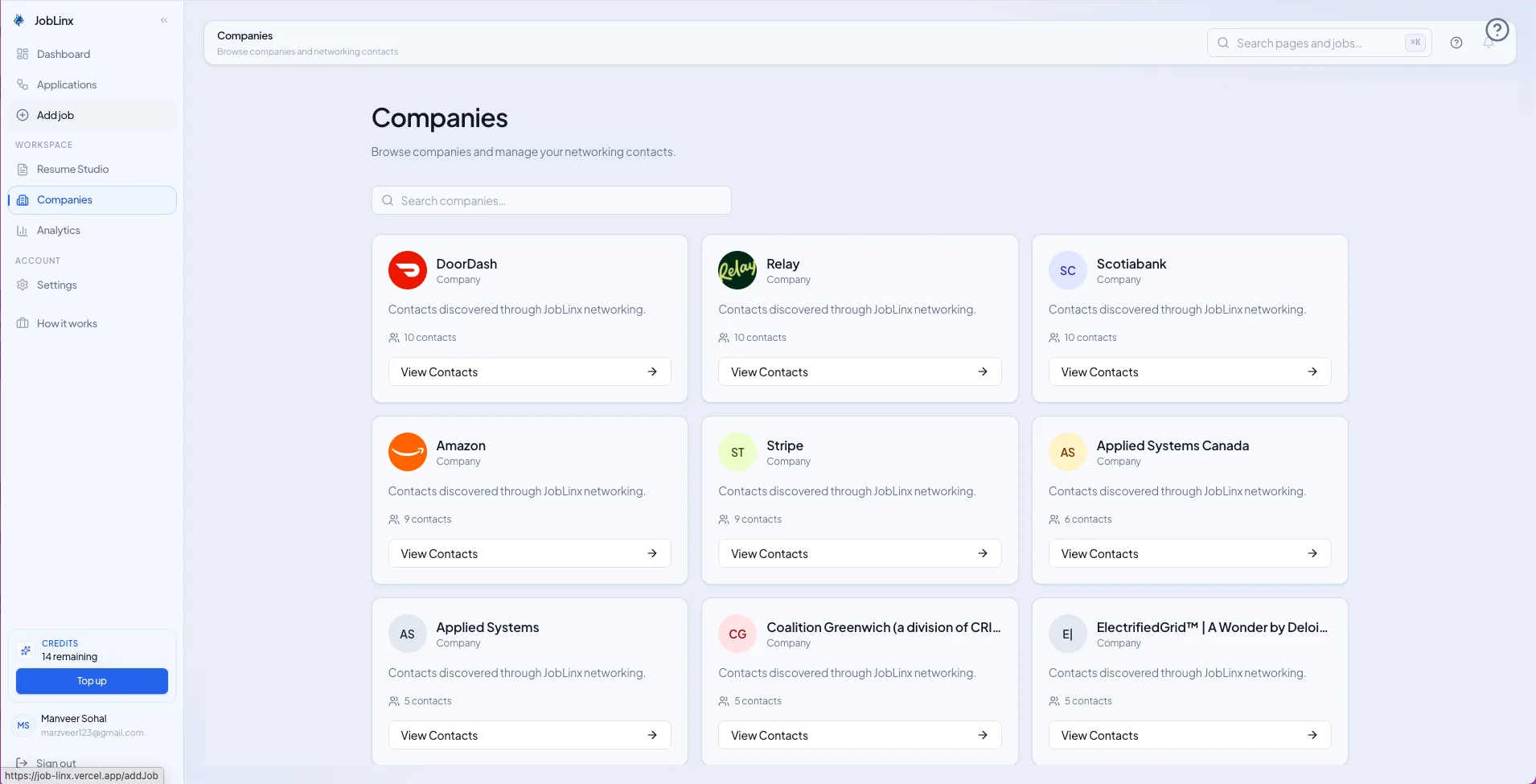
- Contact research and outreach drafting
- Versioned editable application materials
- Supabase authentication with user-specific data protection
Architecture
High-level system pieces involved in the product.
- 01
Next.js frontend for dashboard, applications board, Resume Studio, and company research
- 02
FastAPI backend for parsing, matching, and generation workflows
- 03
Supabase authentication and PostgreSQL for user-scoped application data
- 04
TanStack Query caching across core job-search views
- 05
Dockerized services for consistent local and deployment environments
Technical decisions
Challenges and trade-offs
Technology stack
- Frontend
- Next.js · TypeScript · React
- Backend
- FastAPI · Python · Docker
- Data
- Supabase · PostgreSQL
- AI
- OpenAI
- Other
- TanStack Query · SQLAlchemy
Screenshots