Project · Live product
Almaari
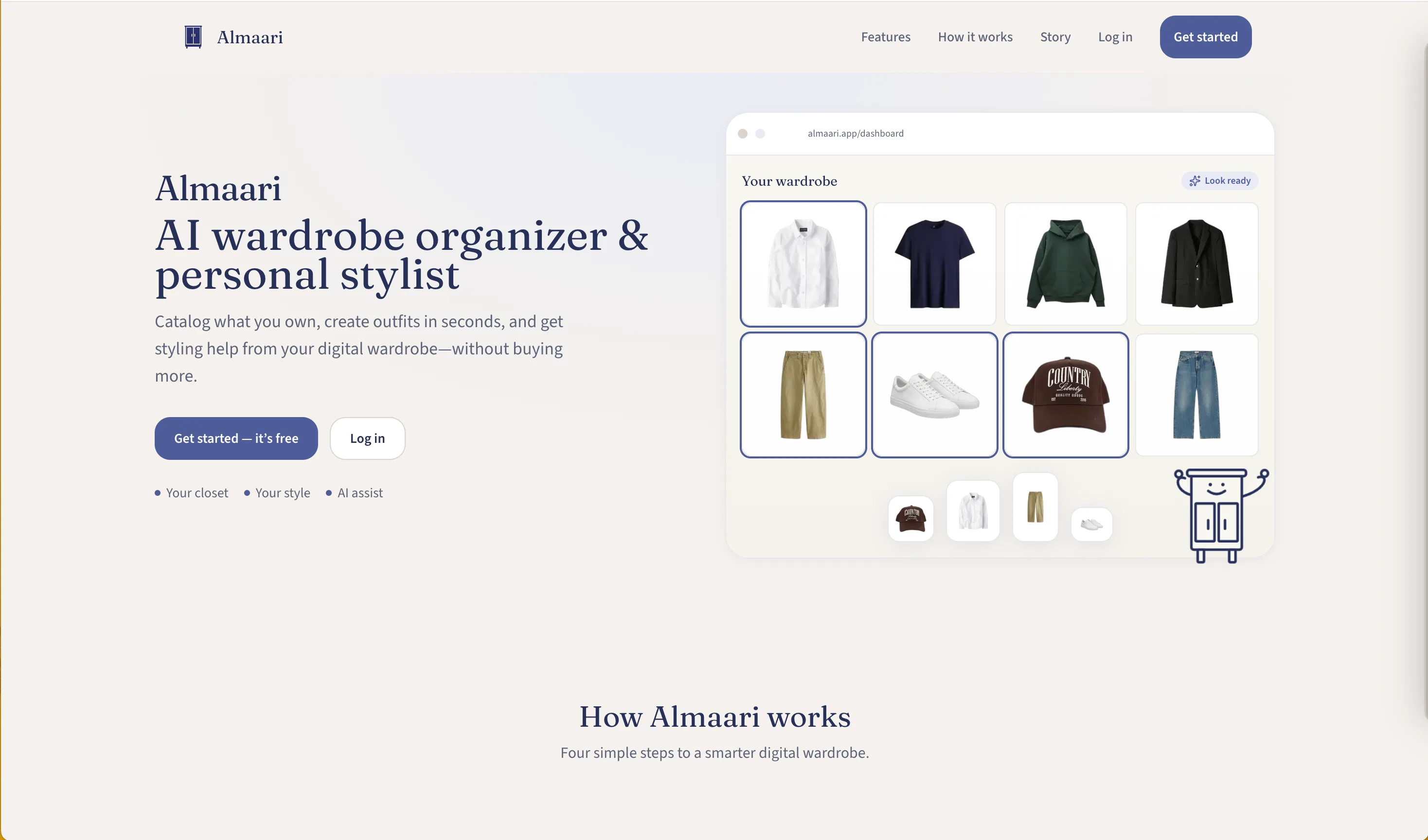
An AI-assisted digital wardrobe that helps users organize clothing, build outfits, and make better use of what they already own.
Overview
Almaari is a full-stack wardrobe product. Users upload clothing photos, get AI-assisted metadata, browse and filter their wardrobe, compose outfits, and ask an in-product assistant for styling tips. The system spans authentication, object storage, background image processing, caching, and a polished dashboard experience.
Product
An AI-assisted digital wardrobe that helps users organize clothing, build outfits, and make better use of what they already own.
Audience / need
People struggle to keep track of what they own, spend too long choosing outfits, and rebuy clothes they already have.
Ownership
Designed and implemented the product across frontend, backend, authentication, data modelling, image storage, image processing, AI analys…
Result
~25% — API performance improvement
The problem
- Clothing collections are hard to organize digitally, especially when photos have busy backgrounds and incomplete labels.
- Outfit planning is slow when users cannot see their wardrobe clearly or reuse past combinations.
- Manual metadata entry creates friction that prevents people from keeping a useful digital wardrobe.
The solution
- A dashboard-first product where uploads, filtering, outfit building, and AI assistance live in one workflow.
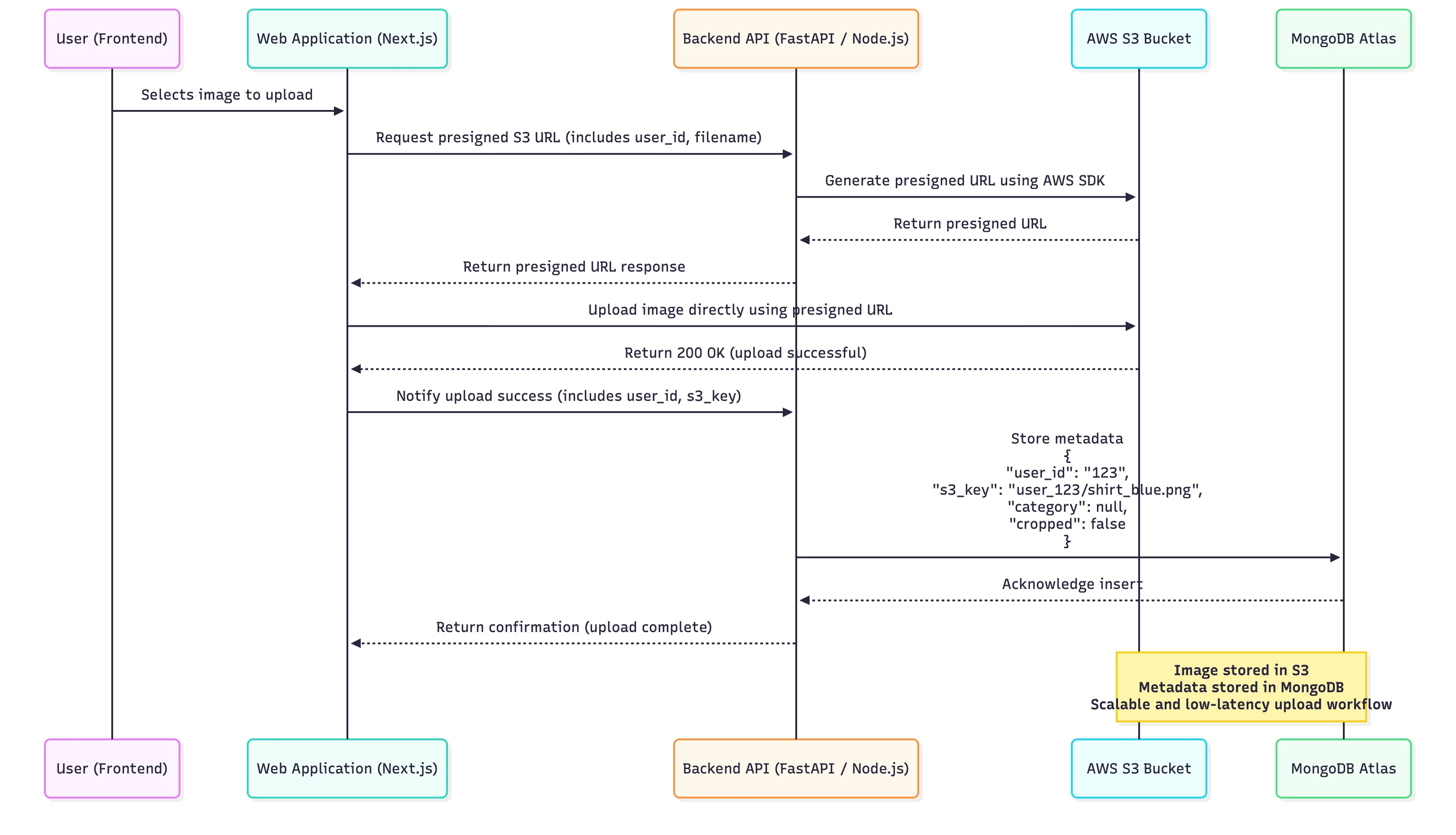
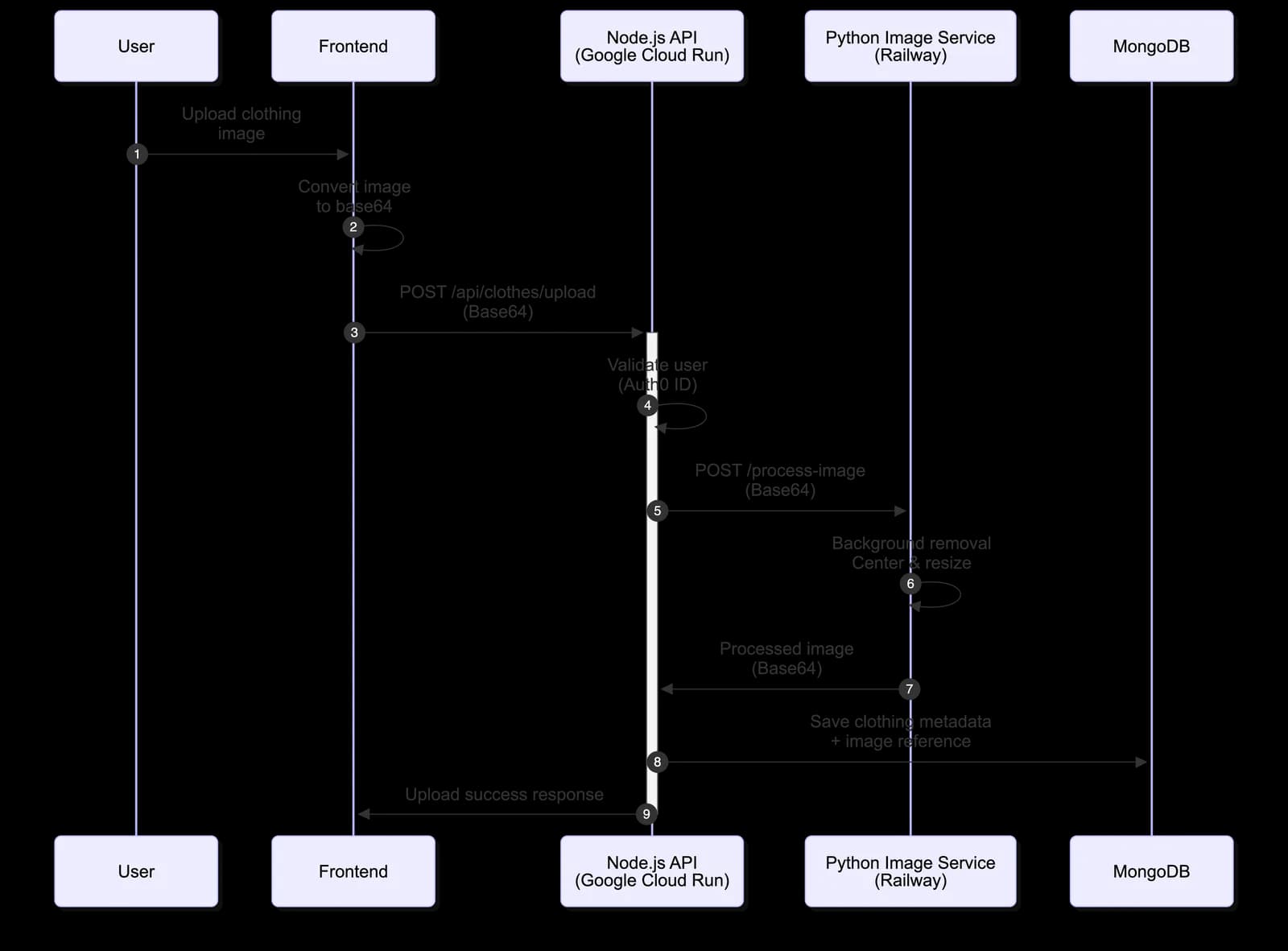
- Presigned S3 uploads keep large images off the API server while MongoDB stores structured wardrobe data.
- A separate Python image-processing service handles CPU-heavy background removal asynchronously.
- Redis caching and React Query reduce repeated fetches so the wardrobe feels responsive.
What I built
- Designed and implemented the product across frontend, backend, authentication, data modelling, image storage, image processing, AI analysis, outfit generation, and deployment
- Built an asynchronous image processing and background-removal workflow
- Improved perceived upload performance by separating metadata persistence from image processing
- Improved MongoDB and Redis-backed API performance by approximately 25% during development
- Reduced manual clothing metadata entry by roughly 40% through AI-assisted analysis
Key results
~25%
API performance improvement
Approximately 25% improvement in MongoDB and Redis-backed API performance measured during development
~40%
Less manual metadata entry
Roughly 40% less manual clothing metadata entry through AI-assisted analysis
End-to-end
Product ownership
Built across frontend, backend, auth, data modelling, storage, image processing, AI, and deployment
Product flow
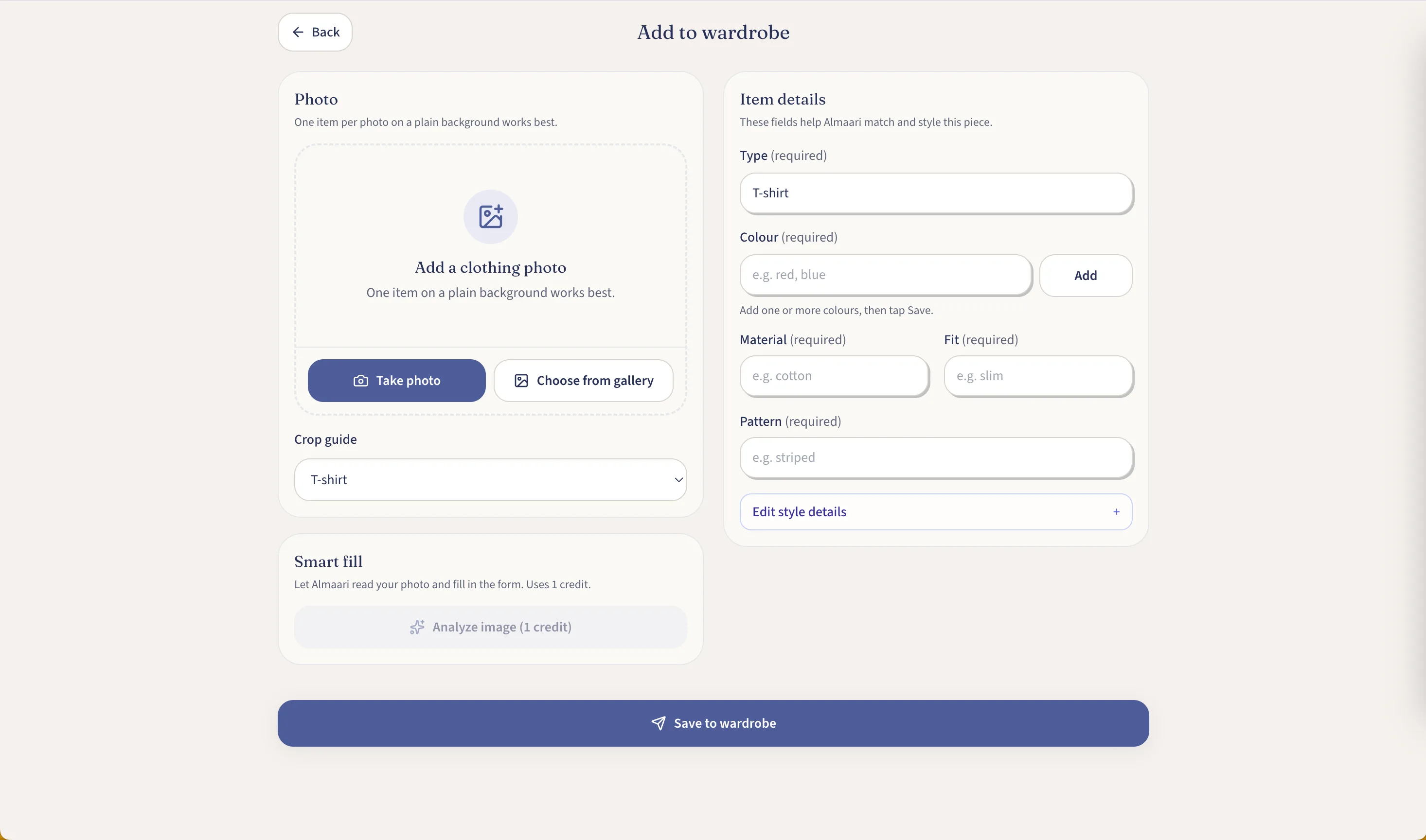
- Clothing photo upload with background removal
- AI-assisted clothing metadata analysis
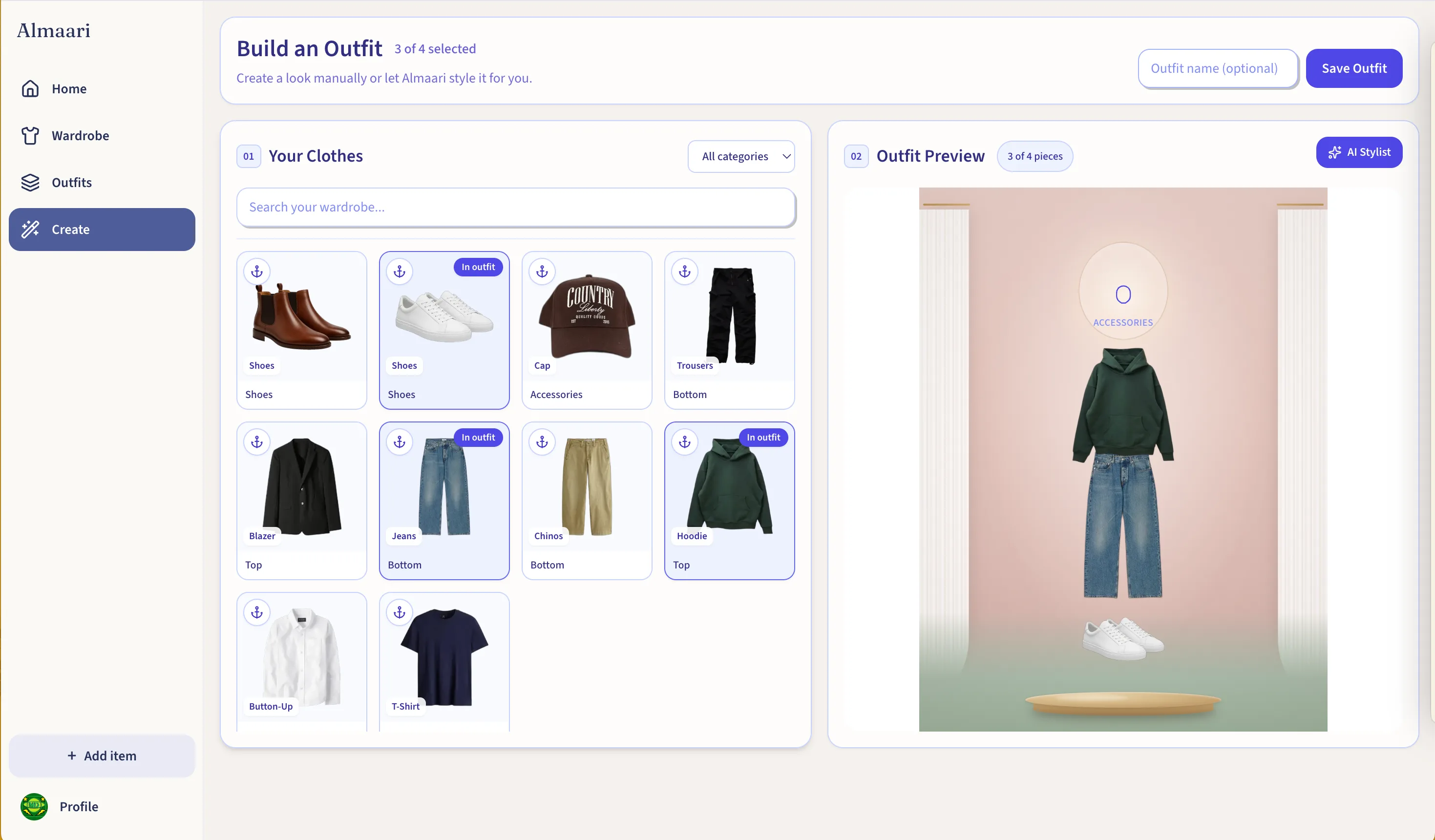
- Wardrobe filtering by type, colour, and style
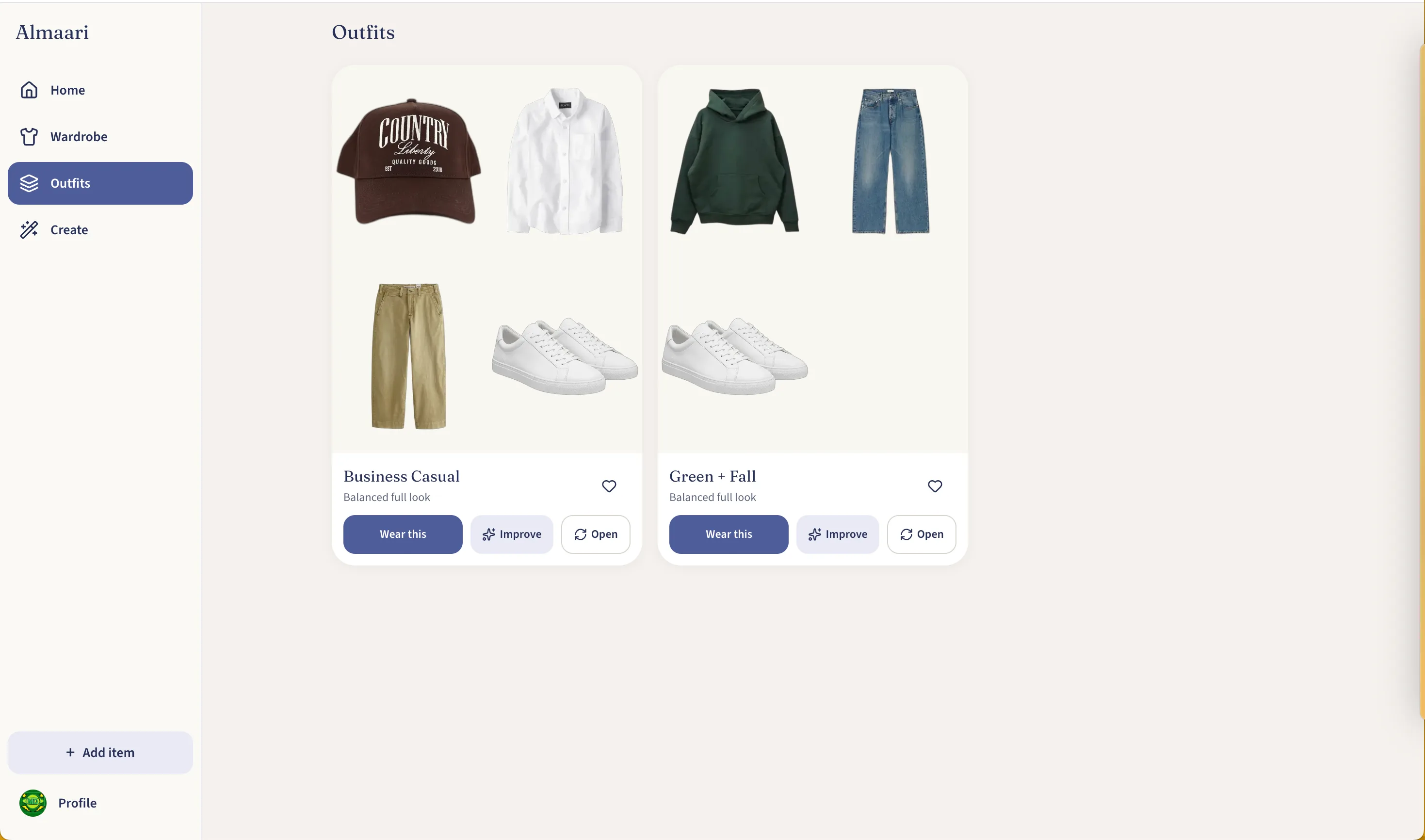
- Slot-based outfit creation with layering
- In-product AI styling assistant
- Auth0 authentication and user-scoped data access
Architecture
High-level system pieces involved in the product.
- 01
Next.js dashboard frontend with Auth0-protected flows
- 02
Node.js and Express REST API with route → controller → model structure
- 03
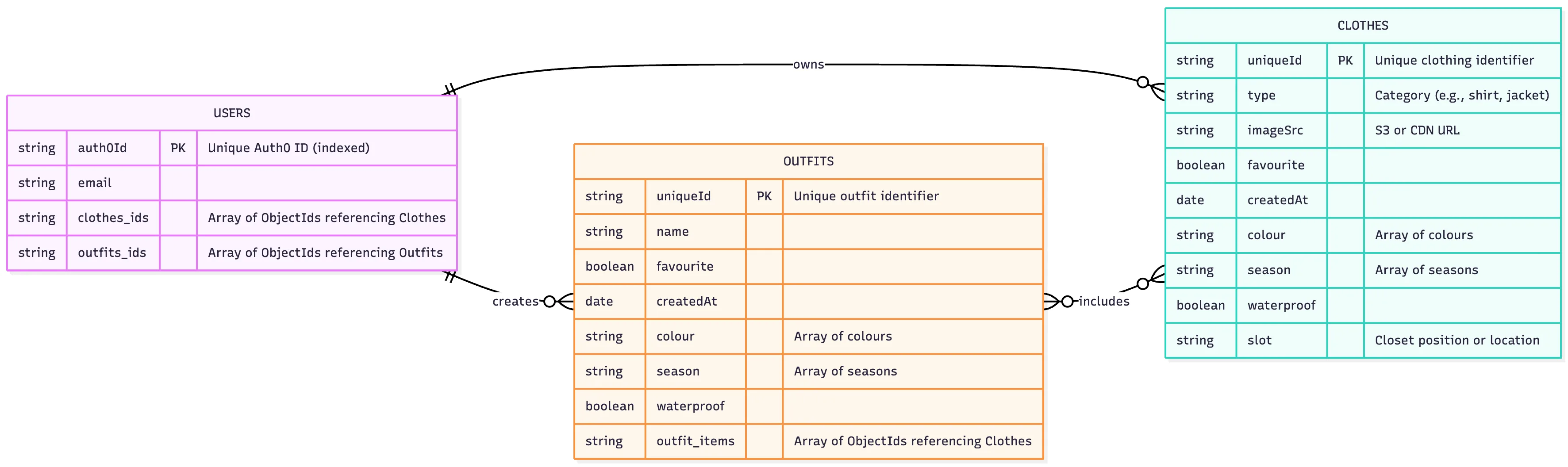
MongoDB collections for Users, Clothes, and Outfits with indexed queries
- 04
Upstash Redis read-through caching with graceful fallback
- 05
AWS S3 storage using presigned URLs
- 06
Python microservice for OpenCV background removal
Technical decisions
Challenges and trade-offs
Technology stack
- Frontend
- Next.js · TypeScript · React
- Backend
- Node.js · Express · Auth0 · AWS S3 · Docker · Python
- Data
- MongoDB · Redis
- AI
- OpenAI · OpenCV
Screenshots